PIONEER
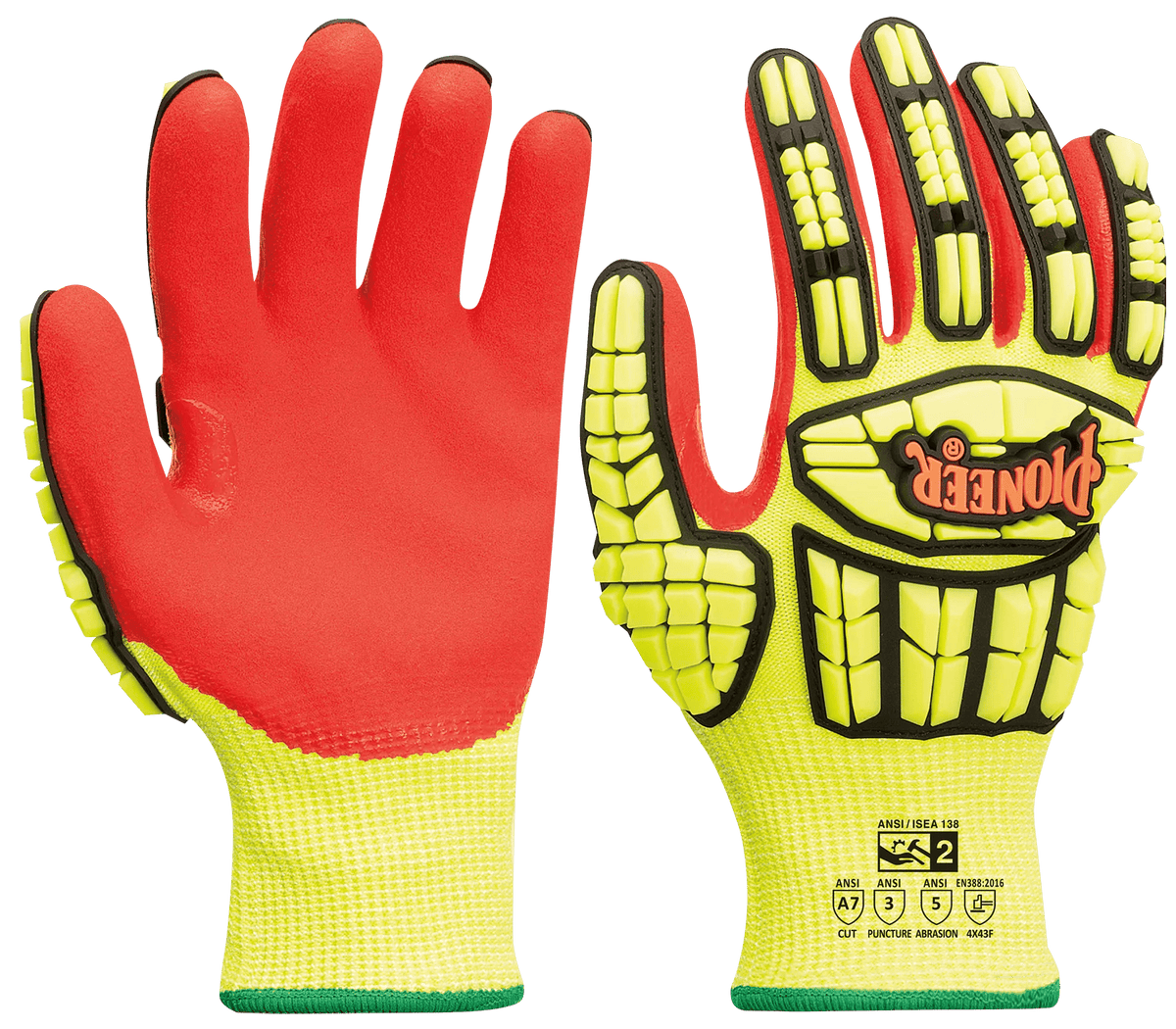
Pioneer Level A7 & Puncture Resistant Gloves - TPR
Pioneer Level A7 & Puncture Resistant Gloves - TPR
- Brand
- PIONEER
- Category
- Safety Gloves
- SKU
- V5012260
- Model number
- V5012260
- Cut resistance
- ANSI/ISEA 105 A7
Shop this equipment in
Impossible de charger la disponibilité du service de retrait
Hi-vis yellow work gloves with red TPR protection for handling tasks that require cut, abrasion, puncture and impact resistance.
- 13-gauge composite-filament construction with TPR impact protection.
- Nitrile palm and reinforced thumb saddle.
- ANSI Level A7 cut, ANSI Level 5 abrasion and ANSI Level 3 puncture ratings.
- ANSI/ISEA 138 Level 2 impact rating and a ribbed cuff.
Suitable for automotive, construction, metal and glass handling/fabrication, oil and gas, and shipping/receiving. Choose the appropriate glove size and follow the manufacturer’s instructions for the task and PPE program.
Glove-selection reference chart
General selection guidance—not this product’s cut rating. Not every glove is cut-rated.

Read the full cut-resistant glove guide | Open full-size chart
Read chart as text
Choose from the task and hazard assessment—not a cut rating or job title alone.
| Selection factor | What to check |
|---|---|
| Cut exposure and rating | Compare the specific glove's manufacturer-stated cut data. ANSI/ISEA A1–A9 indicates increasing resistance in a standardized blade-cut test—not a universal job recommendation. |
| Sharp edges or heavy materials | Assess edge condition, force, frequency and movement. Check separate abrasion, puncture or impact performance where required. |
| Grip and dexterity | Trial the actual surface, tools and controls. Compare coating, grip, flexibility and tactile sensitivity. |
| Liquids or chemicals | Do not assume a cut-resistant knit or coating protects from chemicals. Check the SDS and manufacturer data for the chemical, concentration and contact duration. |
| Heat, cold, welding or electrical work | Verify the separate thermal or electrical protection required. A cut rating is not electrical protection. |
| Rotating or moving machinery | Review equipment instructions and the site procedure before introducing gloves near moving parts. A high cut rating does not resolve entanglement risk. |
| Fit, condition and care | Check size, cuff coverage and sleeve compatibility. Inspect for damage, contamination and loss of grip; remove damaged gloves from service. |
Cut-resistant does not mean cut-proof
Higher cut resistance does not establish protection from puncture, chemicals, heat, electrical hazards or moving machinery.
General glove-selection reference. Displaying this chart does not mean this product is cut-rated or suitable for every listed hazard. Confirm its specific performance data, manufacturer limits and site requirements.
General glove-selection reference. Displaying this chart does not mean this product is cut-rated or suitable for every listed hazard. Confirm its specific performance data, manufacturer limits and site requirements.
High-visibility workwear reference chart
General selection guidance—not a certification or CSA class rating for this product.

Read the full high-visibility workwear guide | Open full-size chart
Read chart as text
Start with the site and task assessment—not colour, price or vest style alone.
| Site condition | What to check |
|---|---|
| Daylight | Check fluorescent background material and contrast against the actual worksite background. |
| Dawn, dusk, fog or changing light | Review fluorescent and retroreflective features, sightlines, shadows and the worker's orientation to equipment. |
| Darkness or vehicle-light exposure | Check retroreflective material. It returns light toward its source; bright colour alone is not enough in darkness. |
| Moving equipment or changing directions | Check all-around visibility and coverage. Arm and leg stripes can help show movement and direction. |
| Rain, cold or layered PPE | Keep the necessary high-visibility features on the visible outer layer. Trial fit, fastening and movement with normal PPE. |
| Tools, straps, harnesses or logos | Check that equipment and additions do not hide visible areas. Review the finished garment while reaching, bending and climbing. |
| Wear, dirt or contamination | Inspect trim, fabric and closures. Follow the care label and replace worn, badly soiled or contaminated apparel. |
Visibility is one control—not the whole traffic plan
Use separation, pedestrian routes, lighting and traffic controls alongside apparel.
General selection guidance—not a CSA class chart or certification of this product. Confirm applicable site requirements, product documentation and manufacturer instructions. High visibility does not replace protection from other hazards.
General selection guidance—not a CSA class chart or certification of this product. Confirm applicable site requirements, product documentation and manufacturer instructions. High visibility does not replace protection from other hazards.